There is no single national price
Mexico has no official rate setting what a residential system should cost. As a market reference, commercial publications reviewed during 2026 show ranges near $15,000–$22,000 MXN per installed kW; other local quotes publish wider ranges. These are prices advertised by providers, not an independent survey or a national statistical average.
To give a sense of scale, that range is roughly $45,000–$66,000 pesos for 3 kW and $75,000–$110,000 for 5 kW, before differences in scope, taxes, location and roof conditions. An academic source from Tecnológico de Monterrey documented a specific quote of $61,333 before tax for 3.3 kW, about $18,586/kW; that is a case study with one quote, not a universal price.
Prices per kW help you see whether a proposal deserves questions, not choose an installer or predict your bill. Always confirm the date, city, size in kWp, taxes, equipment, included work and how long the offer is valid.
What a grid-tied system usually includes
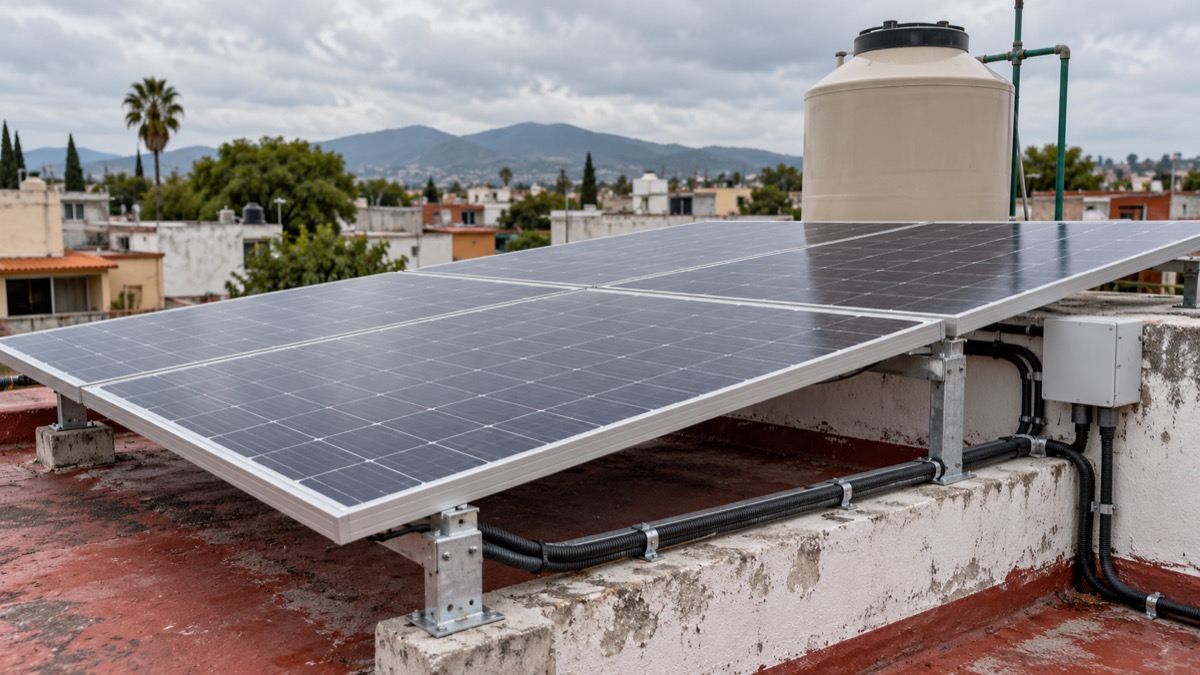
A complete quote normally identifies modules, inverter or microinverters, structure, wiring, protections, design and labor. It should also explain whether it includes a technical visit, changes to the panel board, interconnection paperwork, taxes, monitoring and commissioning. The words "turnkey" (llave en mano) don't replace the list of what's covered.
Ask separately what isn't included: roof reinforcement or repair, waterproofing, removing obstacles, long conduit runs, panel board changes, a crane, local permits, batteries and any work after the meter. Interconnection costs and steps should be checked with CFE for your type of project; don't assume any adjustment or study will be free because a provider says so.
Panels alone don't make a working home system. A quote that compares only the price per module leaves out the inverter, mounting, protections and electrical work, so it may look cheap without describing the same solution.
- Panels and inverter, with exact models.
- Structure and roof attachment.
- Wiring, conduit and protections.
- Design and labor.
- Technical visit and commissioning.
- CFE interconnection paperwork.
- IVA (Mexican sales tax) and monitoring.
What makes the cost vary
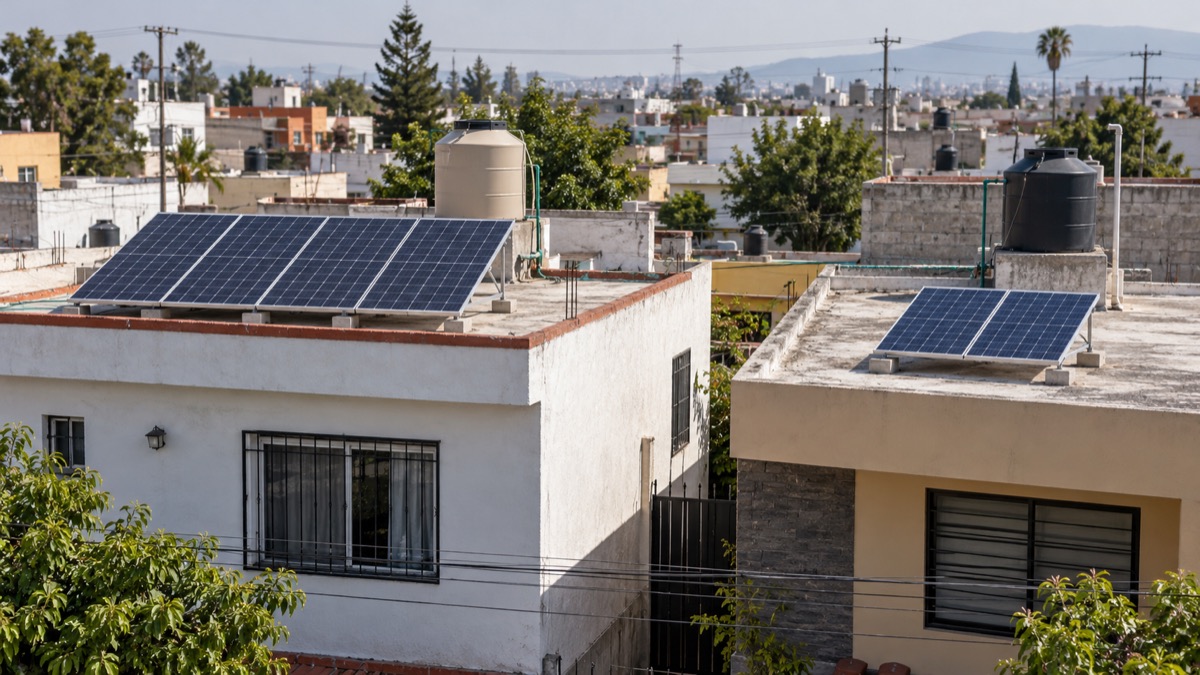
Size is only part of it. The inverter's brand and setup, module power, roof type and condition, shade, distance from the array to the panel board, work access, required protections and electrical complexity all play a role. A clear flat concrete roof can be simple; a sloped, fragile or obstructed roof may need extra structure or labor.
Batteries change the scope substantially: they add storage, electronics and backup design. A conventional grid-tied solar system normally shuts off during a blackout for safety; having panels doesn't mean the home stays powered. If you need backup, ask the proposal to describe which circuits it would cover, for how long and under what load assumptions.
Location also matters because of logistics, equipment availability, environmental conditions and service rules. That's why a figure from Monterrey, Mexico City or an online store shouldn't be presented as what any home in the country will pay.
Source: LM Soluciones: commercial example of local prices in Monterrey and installation variables, updated October 2026 ↗How to compare proposals fairly
Ask for quotes to use the same bill history and compare DC size in kWp, inverter capacity, estimated monthly generation and the losses considered. Ask for exact models and data sheets; the number of panels alone doesn't reveal total size or production.
Compare the scope line by line: equipment, structure, protections, installation, paperwork, taxes, adjustments and exclusions. Check the separate warranties for modules, inverter, installation and leaks. A long warranty is only useful if it identifies who stands behind it, what it covers and how to request service.
The savings estimate should start from your tariff, usage by period, generation that matches your use and the current compensation rules. Don't accept a generic percentage applied to the whole bill as a conclusion. Include maintenance, possible component replacement and financing if you want to estimate payback.
Source: Asolea: guide to comparing the scope, generation and assumptions of solar quotes ↗Work out a starting reference, not a quote
As an exercise, 4 kW multiplied by a published range of $15,000–$22,000/kW gives a rough reference of $60,000–$88,000 MXN. That doesn't confirm that 4 kW is the right size, that the range includes what you need or that the installation can be done without extra work.
Asolea's estimates use a more cautious range, $18,000 to $24,000 per kWp, so as not to over-promise. If your quote is far from these ranges, ask why.
To get a more useful proposal, gather six to twelve months of bills, note any changes in occupancy or appliances, and share photos of your roof, location, shade and the condition of your electrical system. The provider should check the site before finalizing the design and explain expected production and exclusions in writing.
If the price is far below other proposals, ask them to clarify equipment, protections, permits, taxes, structure, warranties and who will do the installation. If it's far above, ask for the breakdown and the technical justification. The goal is to compare equivalent systems, not chase the lowest price per panel.
| Size | 550 W panels, approximately | At $15,000 per kW | At $22,000 per kW |
|---|---|---|---|
| 3 kW | 6 | $45,000 | $66,000 |
| 4 kW | 8 | $60,000 | $88,000 |
| 5 kW | 10 | $75,000 | $110,000 |
| 10 kW | 19 | $150,000 | $220,000 |
Quick questions about solar prices
How much does a 3 kW system cost? As simple arithmetic, the published range cited above gives about $45,000–$66,000 MXN. The final price depends on scope and may fall outside that reference.
How much does a 5 kW system cost? The same reference gives about $75,000–$110,000 MXN. That isn't a size recommendation: your usage, tariff, roof and local production determine which capacity is worth evaluating.
How long does payback take? Price alone can't answer that. You need to estimate useful solar energy, the value of the kWh displaced, tariff changes, charges that remain, total investment, financing and maintenance. A timeframe without those assumptions isn't a guarantee.
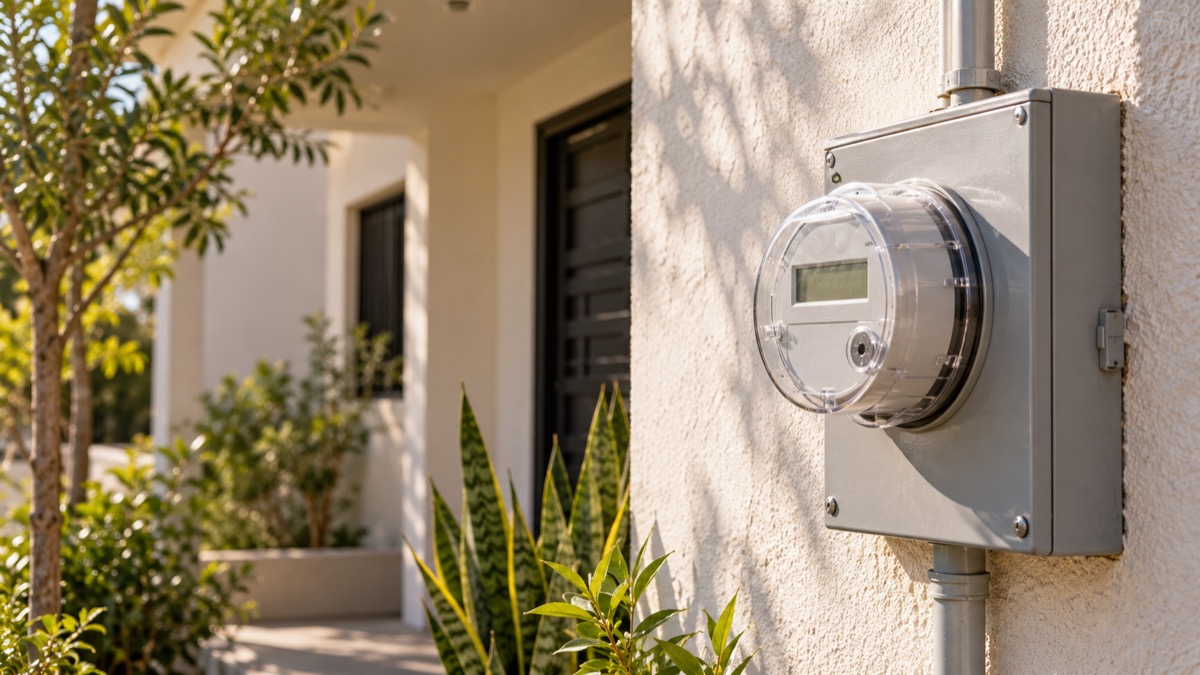
Does the CFE paperwork cost anything? CFE says it's free, although a grid assessment could have a cost, and your installer may charge for handling it. Ask before you sign.
Is there work that can make everything more expensive? Yes: replacing the panel board, reinforcing or waterproofing the roof, or work CFE requires. Ask them to state in writing what happens in those cases.
Sources and scope
The numerical examples are hypothetical. Tariffs and conditions can change and depend on the service; check your bill and current sources before making a decision.
- Solar en Casa: roundup of commercial price ranges published in Mexico during 2026; it warns they aren't official prices ↗
- Tecnológico de Monterrey: study with a specific residential quote and component breakdown, 2025 ↗
- LM Soluciones: commercial example of local prices in Monterrey and installation variables, updated October 2026 ↗
- Asolea: guide to comparing the scope, generation and assumptions of solar quotes ↗