Tariff and price are different things
The tariff (tarifa) is the category and set of rules assigned to your service. The price is the charge applied per unit or period within those rules. The tariff code is printed on your bill; you can't reliably work it out from the amount or from saying the property is a home or a business.
Price tables can depend on the tariff division, the month, the voltage level, demand and time of day. That's why this guide explains the usual families and codes, but doesn't publish one price as if it applied to all of Mexico. For a specific account, confirm the printed code and check the current table for its town and period.
Source: CFE: tariff scheme and category descriptions ↗All of them at a glance
Find your code on your bill. This table tells you which family it belongs to and what to check.
| Code | Who it's for | What to check |
|---|---|---|
| 1, 1A to 1F | Homes, depending on the town's climate | Steps and how close you are to DAC |
| DAC | Homes that went over their limit | Price per kWh and how to get out |
| PDBT | Businesses at low voltage, up to 25 kW | Fixed charge and kWh |
| GDBT | Businesses at low voltage, over 25 kW | kWh and kW |
| GDMTO | Medium voltage, under 100 kW | kWh and kW |
| GDMTH | Medium voltage, 100 kW or more | kWh by time of day and kW |
| DIST, DIT | Industry at high voltage | Energy, demand and time of day |
| RABT, RAMT, 9, 9M, 9CU, 9N | Farm irrigation | Pumping seasons and hours |
| APBT, APMT | Street lighting | Night-time schedule |
Homes: tariff 1, 1A to 1F and DAC
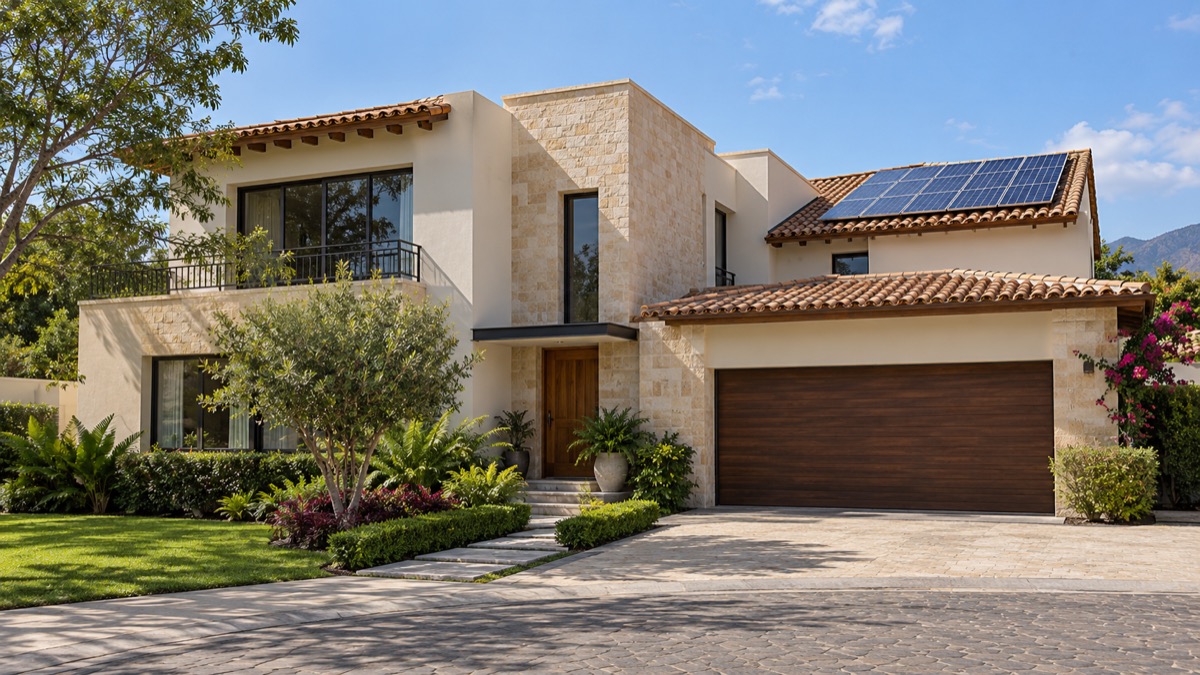
Household tariffs 1 and 1A–1F are for residential services, and their variants relate to the town's climate. In them, the price of energy can be organized in usage steps; in general, government support shrinks in the higher-usage steps. Limits and prices depend on your assigned tariff and the applicable season.
You don't choose the letter: it depends on your town's summer temperature, according to official reports. A town reaches a category if it hits that temperature for two months or more, in three of the last five years. The higher the category, the more subsidized kWh and the higher the limit before DAC.
Regulatory tables may also show DB1 and DB2: low-voltage household categories that separate usage up to 150 kWh a month from usage above 150 kWh a month for calculating tariff components. They aren't the same as the 1A–1F household variants, which depend on the climate zone.
DAC stands for Doméstica de Alto Consumo, or high-consumption household. CFE explains that the reclassification uses your average monthly household usage over a rolling year and that the limit depends on the town. DAC doesn't have the government support of the subsidized household tariffs. Don't use another city's limit or a single bill to claim a home will go on or off DAC.
| Tariff | Summer temperature | Limit before DAC |
|---|---|---|
| 1 | No minimum | 250 kWh a month |
| 1A | From 25 °C (77 °F) | 300 kWh a month |
| 1B | From 28 °C (82 °F) | 400 kWh a month |
| 1C | From 30 °C (86 °F) | 850 kWh a month |
| 1D | From 31 °C (88 °F) | 1,000 kWh a month |
| 1E | From 32 °C (90 °F) | 2,000 kWh a month |
| 1F | From 33 °C (91 °F) | 2,500 kWh a month |
Shops and services: PDBT and GDBT
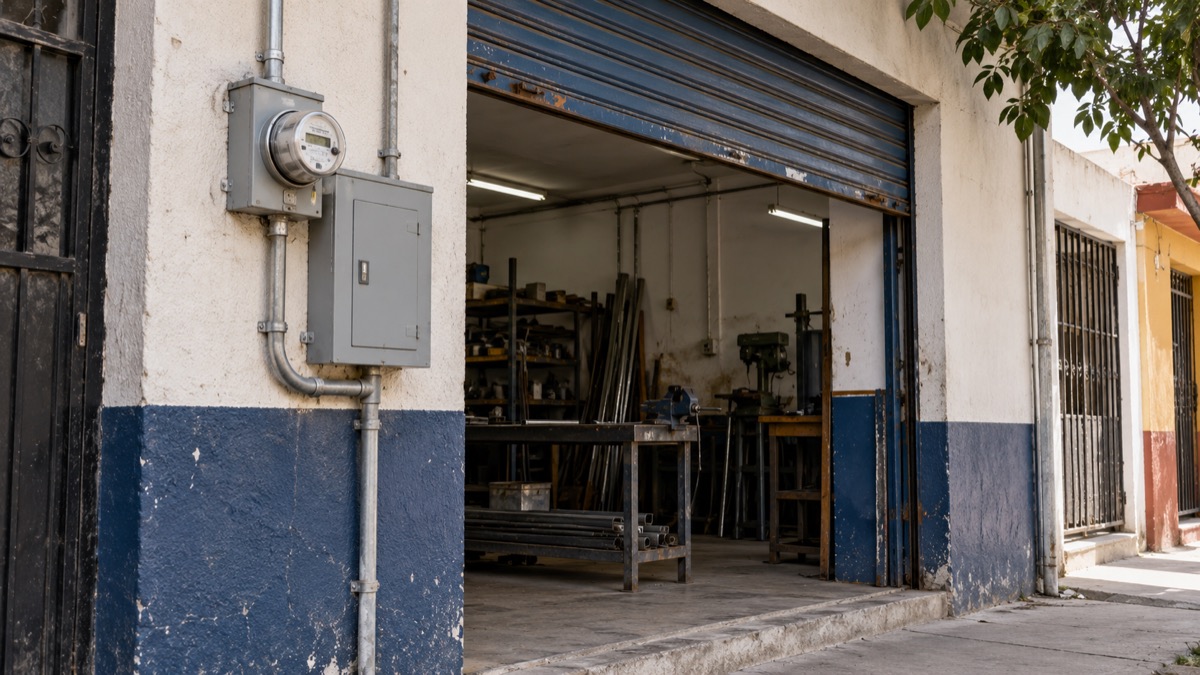
PDBT stands for Pequeña Demanda en Baja Tensión (small demand, low voltage) and is used for low-voltage services with demand up to 25 kW, under the category published by CFE. GDBT is Gran Demanda en Baja Tensión (high demand, low voltage), for services over that threshold. The threshold refers to demand in kW; it isn't accumulated usage in kWh.
If you go over 25 kW on PDBT in three readings in a row, CFE reclassifies you to GDBT. If your business is going to grow, check this first, because the way you pay changes.
These tariffs may show fixed charges and charges related to energy or demand. Check which items are on your bill and how they're calculated; multiplying all your kWh by an average price can miss the power components.
Source: CFE: PDBT tariff, official rules ↗Demand at medium and high voltage: GDMTO, GDMTH, DIST and DIT
GDMTO stands for Gran Demanda en Media Tensión Ordinaria (high demand, medium voltage, ordinary); GDMTH is Gran Demanda en Media Tensión Horaria (time-of-use). On the time-of-use version, energy is recorded by periods of the day, such as base, mid-peak and peak, according to the applicable table. These services require checking both kWh and kW of demand, along with operating hours.
On GDMTO, if your demand reaches 100 kW you must apply to move to GDMTH. On GDMTH, peak hours fall at dusk in most of the country, when panels have stopped producing. The energy and demand guide has the schedule table.
DIST and DIT identify the Industrial Demand categories at Subtransmission and Transmission. They aren't household tariffs or the usual categories for a small shop. The supply voltage, measured demand and contract terms all matter for reading them.
Source: CFE: GDMTH tariff, schedules and maximum demand ↗Tariffs for irrigation and street lighting
RABT and RAMT are Farm Irrigation tariffs at low and medium voltage, and 9, 9M, 9CU and 9N are other farm pumping tariffs. APBT and APMT are Street Lighting at low and medium voltage. They're designed for those uses, so don't use them as a reference for a regular home or business.
For solar, check when you use power. Irrigation is seasonal and can run at night, and street lighting works at night, when panels don't produce. Without net metering or batteries, they may save little in those cases.
Source: CFE: tariff scheme and category descriptions ↗What each tariff means when evaluating solar panels
In a home that still uses power within subsidized steps, each solar kWh used at the right moment may avoid a smaller charge than a kWh billed in an expensive step or on DAC. That usually lowers potential savings and makes it especially important to estimate how much generation you'll actually use at home. Fixed charges, street lighting, taxes and other items may remain even if your grid usage drops.
In a business or on a high-consumption tariff, reducing purchased energy can be worth more, but don't assume panels eliminate demand, capacity or power charges. The effect depends on generation matching the demand CFE measures and bills. A responsible score combines tariff, kWh history, demand and location; available roof space, shade and installation price are reviewed at a later stage.
Source: Diario Oficial: final basic supply tariffs from October 2026 ↗Sources and scope
The numerical examples are hypothetical. Tariffs and conditions can change and depend on the service; check your bill and current sources before making a decision.
- CFE: tariff scheme and category descriptions ↗
- CFE: information on the DAC household tariff ↗
- Diario Oficial: final basic supply tariffs from October 2026 ↗
- Diario Oficial: household and commercial regulatory categories for 2026 ↗
- CFE: DAC tariff, official rules and limits by tariff ↗
- CFE: PDBT tariff, official rules ↗
- CFE: GDMTH tariff, schedules and maximum demand ↗