The most common causes
A bill can go up even if you feel nothing changed. Check these in order, from easiest to hardest.
| Cause | How to spot it |
|---|---|
| The period had more days | Compare the dates and kWh per day |
| You crossed into a more expensive step | Compare the kWh in básico, intermedio and excedente |
| Your summer season ended | On 1A to 1F, your steps get smaller |
| You moved to DAC | Check whether the printed tariff changed |
| Your usage went up | Compare kWh per day with last year |
| An estimated reading | Look for the estimated reading mark (estimada) |
| Past-due amounts or other charges | Check the breakdown: past-due amounts, deposits or installments |
| Prices went up | Compare the price per kWh in each step |
Compare the period and the days
Start with the dates, not the total. Two bills can cover a different number of days.
For example, 600 kWh in 60 days is 10 kWh a day, and 630 kWh in 70 days is 9 kWh a day. The second bill adds up to more energy because it covers more days, even though the daily average is lower.
Why a little extra usage can cost a lot
On home tariffs, your last kWh are the most expensive. That's why a small rise in usage can push your bill up a lot if you are already in the excess step (excedente).
Look at this example on tariff 1, two months, with the prices published for October 2026, including 16% IVA (Mexican sales tax) and no street lighting. The first 280 kWh fall the same way in basic and intermediate; what changes is the excess. With 13% more energy, the bill goes up 37%.
| Usage | kWh in excess | Total with IVA |
|---|---|---|
| 300 kWh | 20 | $501 |
| 340 kWh | 60 | $689 |
Check your tariff and your season
Confirm the tariff code and compare it with your previous bill. If it changed to DAC, it's because your 12-month average went over the limit. There you lose the subsidy and all your kWh cost more.
On tariffs 1A to 1F, summer means the six warmest months of the year, set for your town, and during them the steps are wider. When it ends, the same usage can fall into more expensive steps. That's why a bill can go up at the end of summer even if you use the same amount.
Source: CFE: Tariff 1F, summer season rules ↗Separate energy from the other items
Look at the whole breakdown: usage by step, IVA, street lighting, government support and other items. The electricity market cost block describes the system and isn't added as another charge.
Compare the same items on both bills. Look especially for past-due amounts, unapplied payments, deposits or FIDE installments. They can raise your total without you using more. Dividing the total by the kWh gives an average, not the price of your next kWh.
Source: Profeco: guide to reading the items on your electric bill ↗Check the readings
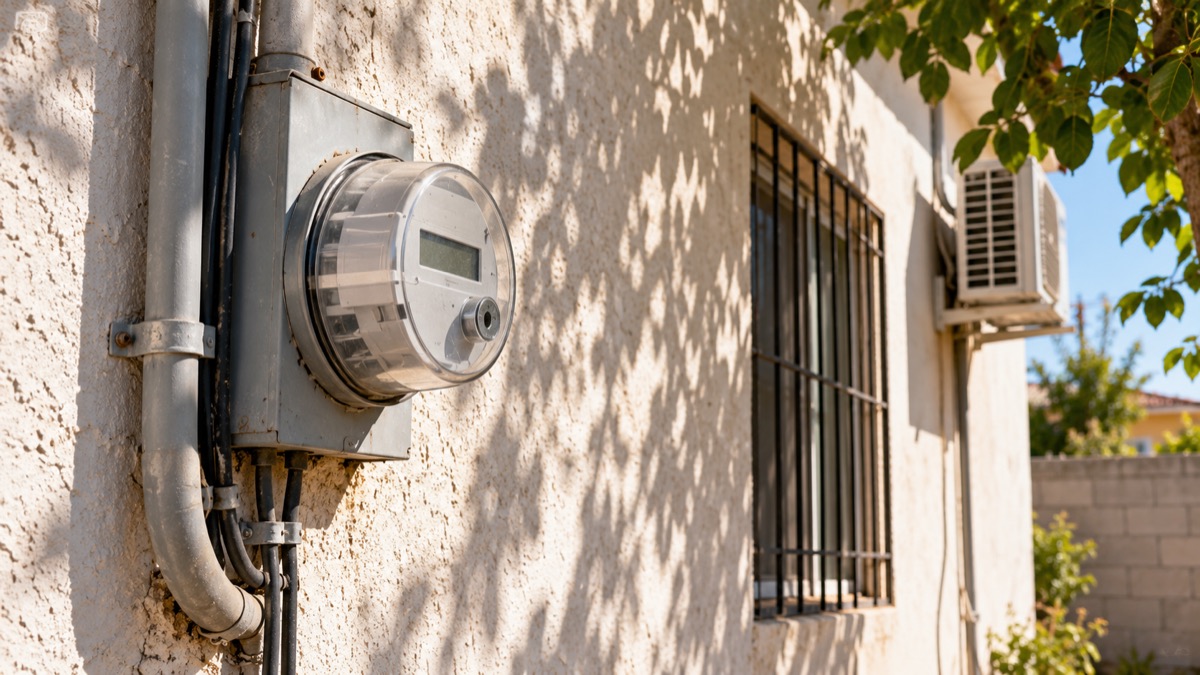
Subtract the previous reading from the current one and, if your bill has a multiplier, multiply. It should equal the billed usage. Check whether any reading says estimada: it means CFE didn't read your meter.
Compare with your meter: write down what it shows, with a photo and the date. If it doesn't match what you were charged, ask for a review.
Source: Profeco: guide to reading the items on your electric bill ↗Look for something using too much
If your kWh per day really went up, look for what changed: heat, more people at home, a new appliance, a refrigerator that no longer seals, or a pump that was left running.
A simple test: turn off everything you can, leave only what's essential, and see whether your meter keeps moving fast. If it moves with everything off, there may be a forgotten appliance or an electrical leak. Don't open electrical panels: call an electrician.
If it still doesn't add up
Steps to file a claim in an orderly way.
- Gather the bills for both periods, plus one from the same period last year.
- Take a photo of your meter, with the date.
- Write down what doesn't add up: reading, usage, tariff or charge.
- Ask for a review by calling 071 or at a CFE service center (Centro de Atención), and keep your report number.
- If they don't resolve it, Profeco, Mexico's consumer protection agency, handles complaints.
Sources and scope
The numerical examples are hypothetical. Tariffs and conditions can change and depend on the service; check your bill and current sources before making a decision.