Why check before getting quotes
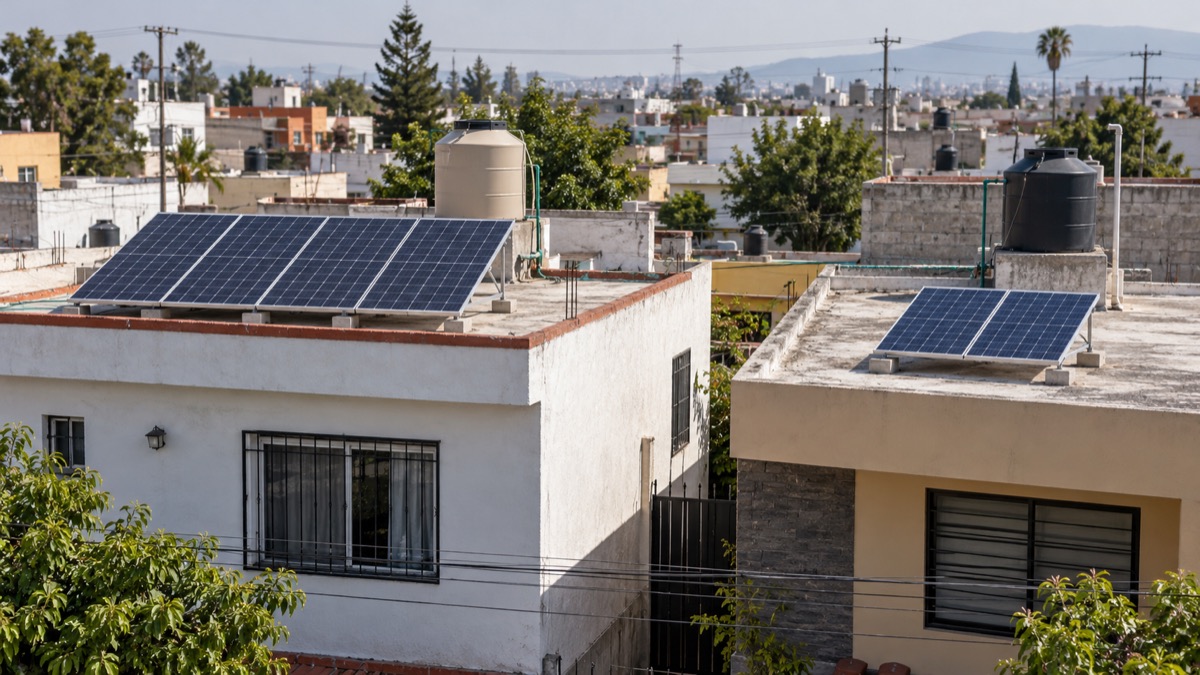
Solar panels are sized to your usage. If you lower it first, you may need a smaller system, and so a smaller investment.
There's one catch: in a subsidized home, panels remove your most expensive kWh first. If a change in habits has already eliminated your excess step (excedente), panels will do less, because they would only remove cheap kWh. That's why it's worth doing this review first, and sizing the system to the usage you'll have afterward.
Make a short list of uses
Write down the equipment that runs the longest or produces cold or heat. Those usually weigh the most.
- Air conditioning and fans.
- Refrigerators and freezers, especially old or extra ones.
- Electric water heaters.
- Pool pump and water pump.
- Dryer, iron, oven and electric cooktop.
- Equipment that never turns off.
Estimate, then measure
A 1,000 W appliance used two hours a day for 30 days would use 60 kWh. That tells you what to measure first, not what you pay.
Appliances that work in cycles, like the refrigerator or air conditioner, don't use their maximum power all the time. For those, use the label or a compatible plug-in meter. Don't open electrical panels or touch connections.
Start with the cheap stuff
This order usually works: first what's free, then what costs little, and big investments last. Every home is different, so check it against your bills.
| Level | Examples | Investment |
|---|---|---|
| Habits | Turning off A/C in empty rooms, adjusting the thermostat, reviewing pump schedules | None |
| Maintenance | Cleaning filters, checking door and window seals | Low |
| Simple upgrades | LED bulbs, window shade, power strips with a switch | Low to medium |
| Big upgrades | Replacing old equipment, insulation or permanent shade | High |
| Generation | Panels sized to your improved usage | High |
Compare each option by the same rule
To choose between replacing equipment or adding panels, fill this in for each option. What matters is how much it costs to stop buying each kWh, not the savings percentage the seller promises.
- Upfront cost, with installation.
- kWh a year you expect to avoid.
- How many years the benefit lasts.
- How you'll verify the result.
Check whether it worked
Beforehand, write down kWh, billed days, temperature and changes at home. Afterward, compare similar periods, ideally the same one from last year, because summer can hide or exaggerate a result.
If you make several improvements at once, you won't know which one worked, even if the whole set is worth it.
Source: CONUEE: energy saving tips at home ↗When to move on to quotes
You can ask for proposals once all of this is true.
- You have 12 months of bills.
- You've fixed the obvious waste.
- You know what usage to expect, with the changes or new equipment that are coming.
- You've checked your tariff and whether you're close to DAC.
- You have photos of the roof and know whether it gets shade.
Sources and scope
The numerical examples are hypothetical. Tariffs and conditions can change and depend on the service; check your bill and current sources before making a decision.